Effective Communication with College Coaches
By: Mikayla SantaCruz
One of the most important skills in the recruiting process is communication. College coaches look for athletes who show initiative, maturity, and professionalism. Learning how to communicate effectively can make a major difference in getting noticed and building relationships with programs.
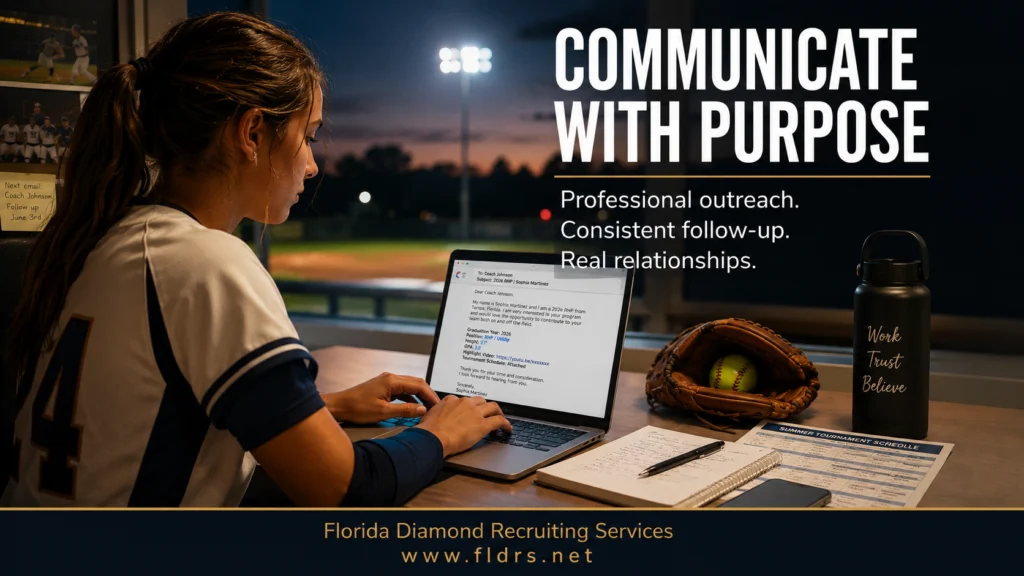
The first step is introducing yourself through email. Athletes should send personalized messages to coaches that include basic information such as graduation year, position, height, academic achievements, and current team. It is also helpful to include a link to a highlight video and your upcoming tournament schedule so coaches know where they can watch you play.
A strong recruiting email should be clear, respectful, and concise. College coaches receive hundreds of emails each week, so keeping your message direct and informative helps them quickly understand who you are and why you are interested in their program.
After the initial contact, athletes should focus on consistent follow up. This could include:
- Sending updated highlight videos
- Sharing tournament schedules and field locations
- Updating coaches on academic achievements or awards
- Thanking coaches after camps or recruiting conversations
It is also important to remember that communication should come primarily from the athlete, not the parent. Coaches want to build relationships with players who take responsibility for their own recruiting process.
There are many different ways athletes can communicate with coaches throughout the recruiting process. However, one of the most effective methods is reaching out through email before attending a camp. Introducing yourself beforehand allows the coaching staff to know who you are and gives them a reason to watch you more closely during the camp.
Camps can be one of the best opportunities to build real relationships with coaches. When I was going through the recruiting process myself, camps were where I first started getting serious looks. They allowed me to introduce myself in person, ask questions, and start meaningful conversations with coaches. Having that face to face interaction can make a big difference.
Athletes can also benefit from having their club or high school coaches communicate with college programs on their behalf. A coach recommendation can add credibility and help provide insight into a player’s work ethic, character, and development.